Tuesday, October 25, 2011

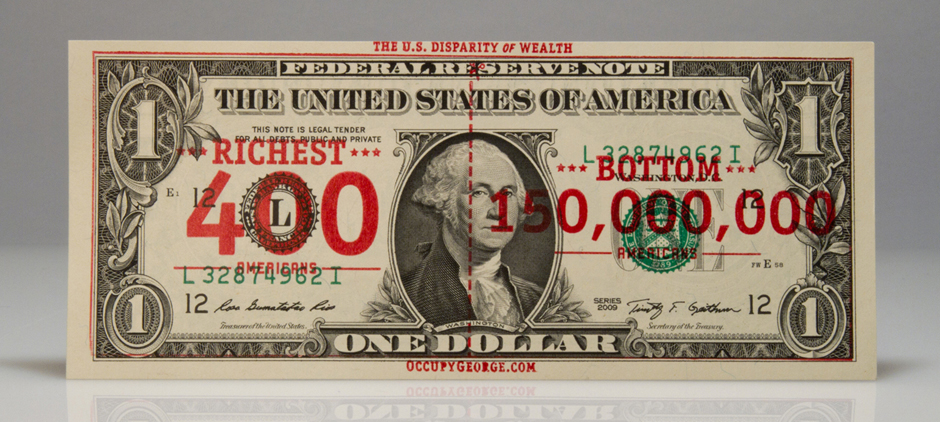
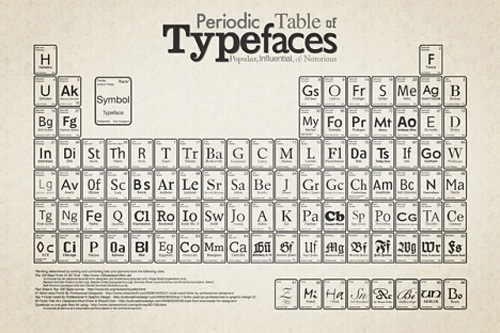
infographic ideas

Typographic:


Image Based:


Non-traditional:


Here are a couple info graphics I designed in the past for newspaper:

 zoomed in view:

Friday, October 21, 2011

posters posters and more posters

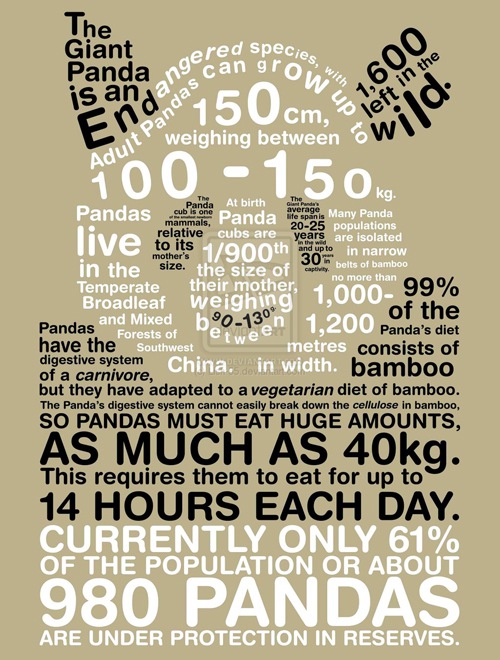
So this weekend we've been asked to create 18 posters for viscom and 7 for type.  That's a lot of posters.  I've started working on them today — so far I've got 3 complete and 1 in the works.  For viscom we are creating infographic posters that are typographic based, image based, and non-computer based.  Here is my favorite typographic poster I've got so far:

Wednesday, October 19, 2011

Thursday, October 13, 2011

Font Classifications

Old Style: 1475
   1. the axis of the thick-thin contrast slopes somewhat to the left.
   2. the crossbar of the lowercase 'e' is horizontal
   3. top serifs are roof shaped and have a trianglar form
Examples: Bembo, Garamond, Sabon, Albertina, and Palatino


Transitional: 1750
   1. Stress in almost vertical or slightly left
   2. Top serifs of lowercase are roof shaped
   3. Lowercase "e" has horizontal crossbar
   Examples: Baskerville, Concorde, Fournier, Perpetua, and Times New Roman


Modern: 1775
   1. the type faces show a strong emphasis on the vertical stroke
   2. sharp contrasts
   3. symmetry and sharp transition to the straight serifs, which are as thin as the thin parts of the letter
Examples: Didot, Bodoni, Walbaum, Linotype, and Didone


Slab: 1880
   1. Hardly any thick/thin contrast in the letters
   2. Heavy rectangular serifs are as thick as the letters themselves (defining characteristic)
   3. Differences in subdivisions are most clearly visible in lowercase letters (sometimes seen as sans-serif to which serifs were added — see lowercase "c")
   Examples: Serifa by Adrian Frutiger, Antique by Vincent Figgins, the first Clarendon by Robert Besley, Beton by Heinrich Jost, and Memphis by Rudolf Wolf


Humanistic Sans Serif: 1812
   1. Line widths are visually equal
   2. The extension on the lowercase "e" points to the right instead of turning toward the cross-bar
   3. The lowercase "g" often has a classic form with two bowls
   Examples: Gill Sans by Eric Gill, Profile by Martin Wenzel, Frutiger by Adrian Frutiger, Scala Sans by Martin Majoor, and Myriad by Carol Twombly and Robert Slimbach


Grotesk: 1898
   1. No Serifs
   2. Axis of Rounding is vertical
   3. Ascender height is usually equal to capital height and the curve of the lowercase "e" is pointed up towards cross-bar
   Examples: Akzidenz Grotesk, Helvetica, Univers, Arial, and Neue Helvetica


Geometric: 1920s
   1. no serifs
   2. link thicknesses are only visually and minimally corrected
   3. the axis of the roundings is vertical
Examples: Futura, Avant Garde, Eurostile, Erbar, and Neuzeit

Monday, October 10, 2011

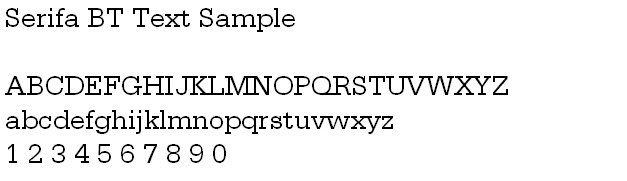
serifa font

All about Serifa

A Serif font in the Slab Serif or Egyptian typeface classification designed by Adrian Frutiger in 1967.

     Adrian Frutiger is a well-known typeface designer born in Switzerland in 1928.  He was a prolific type designer with many typefaces to his name including: Frutiger, Univers, President, Apollo, Serifa, Avenir, OCR-B, Glyfia and Vectora.  At the age of 16 he started working as a printer’s apprentice.  From there he moved to Zurich and studied at the Zurich School of Arts and Crafts.
     In 1952 Frutiger began his working career at Deberny and Peignot in Paris after being persuaded by type-founder Charles Peignot.  Frutiger was always interested in embracing new technology and applying it during his design process.  Besides solely designing original fonts, he would also interpret other type including Didot and Courier.  He has also produced numerous books on type, font and design.  He is still alive and has been working on revising his typefaces with Linotype.


"Serifa was designed by Adrian Frutiger for the Bauer foundry in 1967. The letterforms are based on those of Frutiger’s earlier sans serif design, Univers. Square, unbracketed serifs have been added, making this a slab serif (or Egyptian) typeface. Usually, slab serif types are blocky and difficult to read in text, but Serifa has humanistic forms that are highly readable for both text and display applications such as headlines, captions, or corporate logos."
Wednesday, October 5, 2011

behanced.

Project two is up HERE.

Also, I love this.  And need to follow its advice better.

Saturday, October 1, 2011

hi, may I help you?

So, just looking around for some inspiration on this branding project.  I know the overall direction I want to head in but just need to find my way there.

I stumbled upon these amazing business card designs the other night, thought I'd share:


Lots of other really interesting and varied designs HERE!